
Vasectomy Reversal Pictures
See Vasectomy Reversal Pictures from an Actual Procedure at MFS
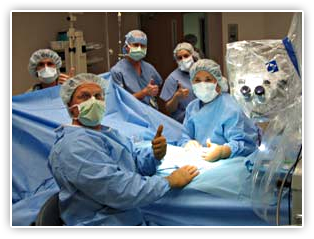
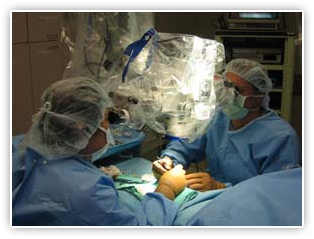
Have you ever wondered what a vasectomy reversal procedure looks like under the microscope? Follow Dr. Bastuba into the operating room and look over his shoulder to view a microsurgical vasectomy reversal pictures.![]()
Vasovasostomy
The vasovasostomy is the most commonly performed vasectomy reversal surgery. During a vasovasostomy, the separated ends of the vas deferens are reconnected. See Dr. Bastuba perform a vasovasostomy with these step-by-step reverse vasectomy pictures.
|
Many of our patients are very interested in seeing an actual vasectomy reversal procedure. |
|
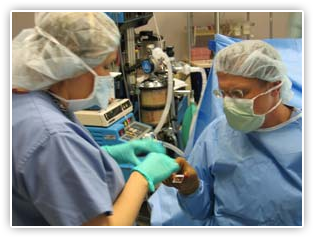
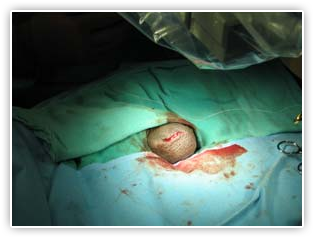
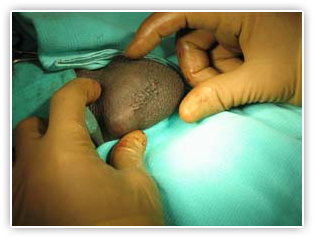
After our board-certified anesthesiologist put the patient under general anesthesia, the testicles are marked for the vasectomy reversal incisions. The incisions are no more than 1-2 inches wide. |
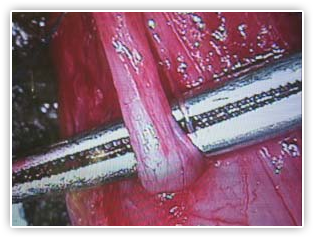
The two separated ends of the vas deferens are located under the microscope. |
|
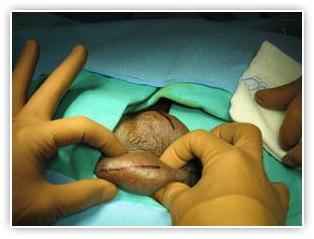
The two ends are isolated from the scar tissue, which had developed after the vasectomy. |
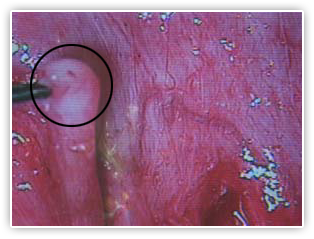
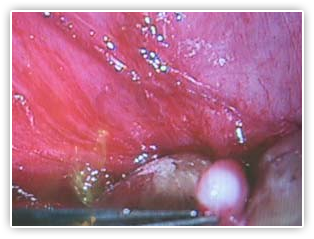
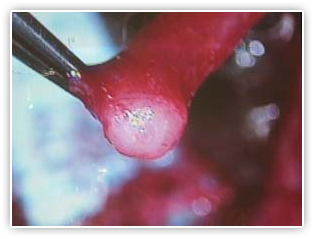
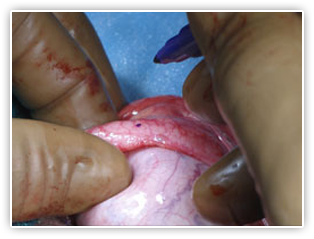
The vas deferens close to the testicle is examined for seminal fluid. |
|
The color (white dot) and consistency of the seminal fluid are good indicators that sperm is present in the vas fluid. |
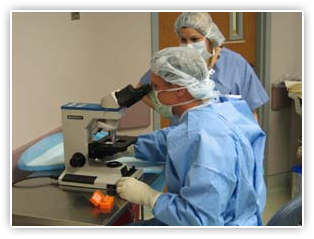
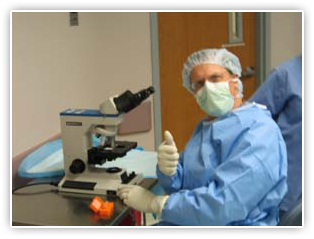
Dr. Bastuba prepares a sample of the vas fluid to be inspected under a laboratory microscope. |
|
If sperm is found in the vas fluid, no blockage in the vas deferens hinders sperm flow. |
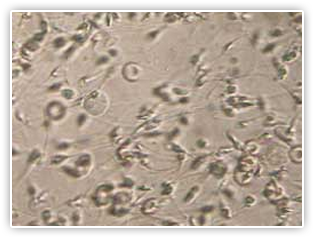
Sperm is found in the vas fluid under the microscope. A vasoepididymostomy won't be necessary and Dr. Bastuba continues with the vasovasostomy procedure. |
|
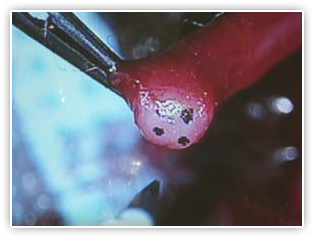
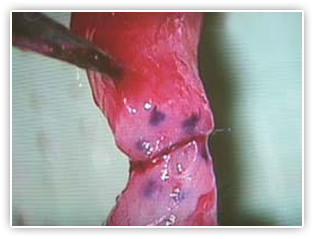
The vas deferens are prepared for the micro sutures. |
Marks on the end of the vas deferens will guide Dr. Bastuba to precisely place the sutures using the Microdot technique. |
|
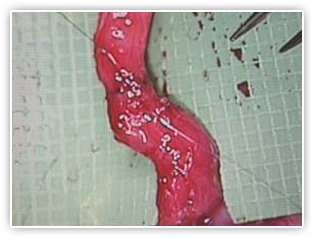
This is the reconnection of the vas deferens half way through the process. The back sides of the vas deferens tubule have been tied together with a micro needle smaller than a human hair. |
After the two inner layers of the vas deferens have been connected, the muscle layer of the vas deferens has also been reconnected. This provides stability and expedites the healing process. |
|
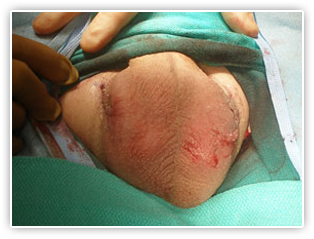
After successfully reconnecting the two ends of the vas deferens, the incision is prepared for closure. |
Once the stitches are placed the vasectomy reversal is successfully completed. |
|
Another successful vasectomy reversal procedure |
During a vasectomy reversal it may turn out that the more complicated reversal procedure, a vasoepididymostomy (VE, also known as epididymovasostomy), will be necessary. See Dr. Bastuba perform a vasoepididymostomy step-by-step.
|
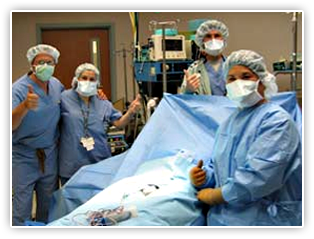
Many of our patients are very interested in seeing an actual vasectomy reversal procedure. |
|
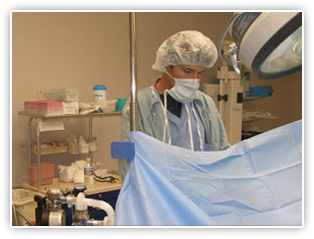
Our board-certified anesthesiologist maximizes intra-operative and post-operative safety and comfort for a gentle take off at the start of the vasectomy reversal. |
The patient is asleep and we are ready to start the vasectomy reversal procedure. Dr. Bastuba is using state-of-the-art microscopic surgery equipment. |
|
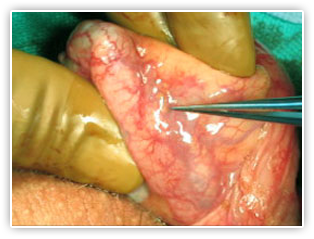
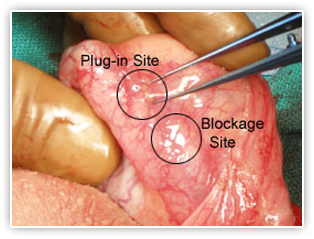
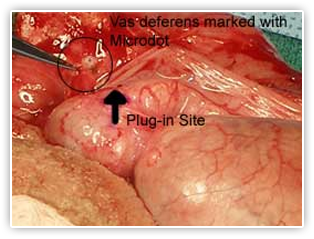
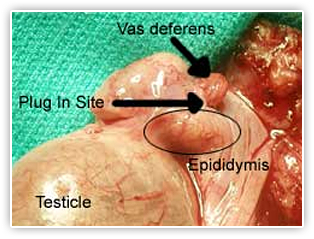
There is no sperm in the vas deferens, so the epididymis is evaluated and a blockage is identified in the mid portion of the epididymis. We will go above the blockage closer to sperm production. |
A plug-in site is chosen above the epididymal blockage site (see image). |
|
The Microdot Technique has been modified by Dr. Bastuba for use with the 2-Suture Longitudinal Intussusception Technique (LIVE) of vasoepididymostomy. |
The difficult task of putting two extraordinarily small tubes together requires an exacting set up. The Microdot Technique helps accomplish this. |
|
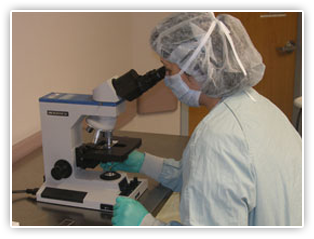
A sample of fluid from the proposed VE plug-in site is evaluated on a phase contrast side table microscope by a trained technician. |
Motile sperm is found in abundance in the fluid sample which means a quality plug-in site has been established. |
|
The passage for the flow of sperm is once again pieced together and ready to go. |
Everything is closed up and the patient can emerge from anesthesia. Afterwards, the patient takes it easy with “feet up in the Lazy-Boy chair” for 36 hours post-op. This is the routine protocol. |